

When Rockhampton Airport shut down due to a suspicious item, most Australians blamed the disruption on the scare alone. Yet the event highlighted something bigger — regional airports face unique challenges when emergencies strike. These hubs move fewer passengers than city airports, but they often operate with tighter budgets, smaller teams, and limited infrastructure (Rockhampton Airport travel disruption).
The scare showed how quickly pressure builds when a crisis hits a regional terminal. Rockhampton did many things well, but the day exposed gaps that airports across Australia share. The incident became a real-world lesson in what happens when limited resources collide with urgent, fast-moving situations (The Nightly and Daily Mail Australia).
Smaller Teams Face Huge Pressure During Emergencies : Rockhampton Airport travel disruption


Regional airports operate with fewer staff. When Rockhampton evacuated passengers, the team had to manage crowd movement, communicate updates, and support emergency crews all at once. Bigger airports usually have separate teams for each task. Rockhampton didn’t.
Limited Space Creates Logistical Problems – Rockhampton Airport travel disruption

The evacuation pushed travellers into open outdoor areas. Rockhampton doesn’t have large holding zones or shaded spaces for long waits. People stood in the sun because the airport simply didn’t have suitable areas for sudden, large-scale evacuations.
Rockhampton Airport travel disruption: Emergency Crews Need Time to Arrive

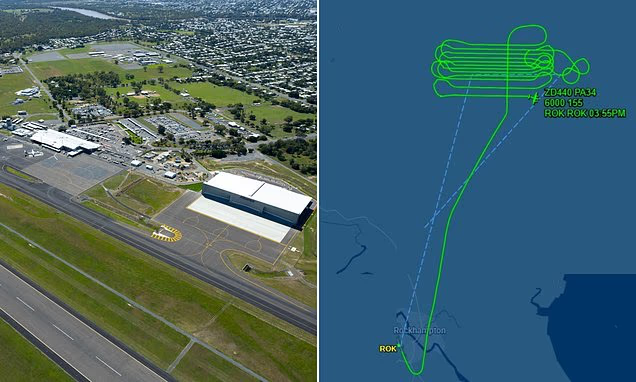
Unlike major hubs, regional airports rely on external specialist teams. Queensland Police and emergency units acted quickly, but they still needed time to reach the site. Regional airports struggle here because they often lack advanced threat-assessment tools.
What the Rockhampton Incident Revealed
| Challenge | What Happened | Impact on Travellers |
|---|---|---|
| Staffing limits | Small team managed all tasks | Slow communication |
| Space constraints | Crowd held outdoors | Heat and discomfort |
| Delayed specialist support | External crews required | Long assessment time |
| Weak communication systems | Mixed messages spread | Higher stress levels |
Regional Airports Need Stronger Crisis Plans


The scare showed that regional hubs must update their planning. They need clearer communication systems, shaded outdoor areas, and faster internal coordination. None of these fixes require huge budgets, but they do require commitment and planning.
The Rockhampton Airport scare didn’t expose failure, but it highlighted the reality regional airports face every day. Smaller teams, limited facilities, and slower access to specialist support make emergency response difficult. The incident showed where improvements can lift safety and reduce stress for travellers. These upgrades won’t eliminate crises, but they can help regional hubs handle them with more confidence and clarity.


