

The long road to Pywel has finally reached its end. Stepping into the shoes of Kliff, the weary leader of the Greymanes, the very first Crimson Desert first impression is one of sheer scale. From the moment the three distinct loading screens fade away, you are dropped into a world that feels almost impossibly detailed. It is a land of sweeping chalk cliffs, industrious medieval villages, and lighting effects that make every wildflower meadow look like a Renaissance painting. But as any seasoned player knows, a beautiful world is only as good as the adventures it contains. After spending a significant amount of time with the Crimson Desert 2026 build, the experience is a fascinating, if sometimes disjointed, mixture of high-budget prestige and old-school grind.
The First Contact: A Chaotic Descent into Pywel
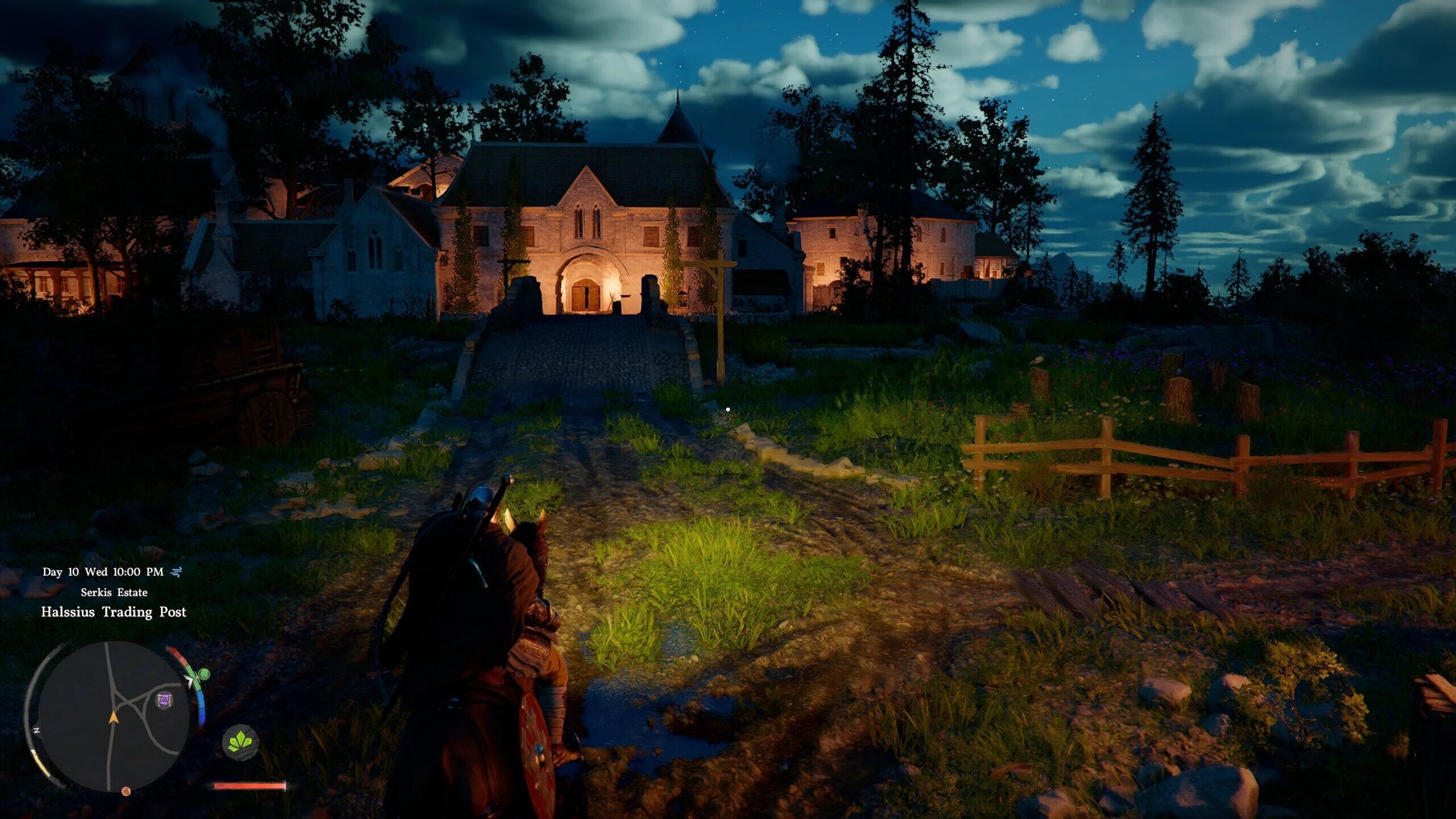
The first 10 hours of Crimson Desert gameplay experience are, in a word, breathless. The game doesn’t just introduce mechanics; it hurls them at you. Within the opening hours, you transition from a desperate survival story on a riverbed to infiltrating a high-tech celestial fortress. You are granted “Axiom Force”—a magical grappling tool that feels reminiscent of modern physics-based sandbox games—and the ability to transform into a feathered creature to glide through the skies.
It is a lot to take in. While playing Crimson Desert, you quickly realize that Pearl Abyss isn’t interested in minimalism. Every button on the controller seems to have three different functions depending on the context. One moment you are taming a horse, and the next you are learning a “pump kick” simply by watching an enemy perform it. This “learning by doing” system is a standout feature, encouraging you to engage with the world to unlock Kliff’s full potential. However, the sheer density of these Crimson Desert gameplay systems can feel like informational vertigo, requiring a steep learning curve before the “fun” truly settles in.
Combat and the “Prestige” Grind: A Crimson Desert Opinion
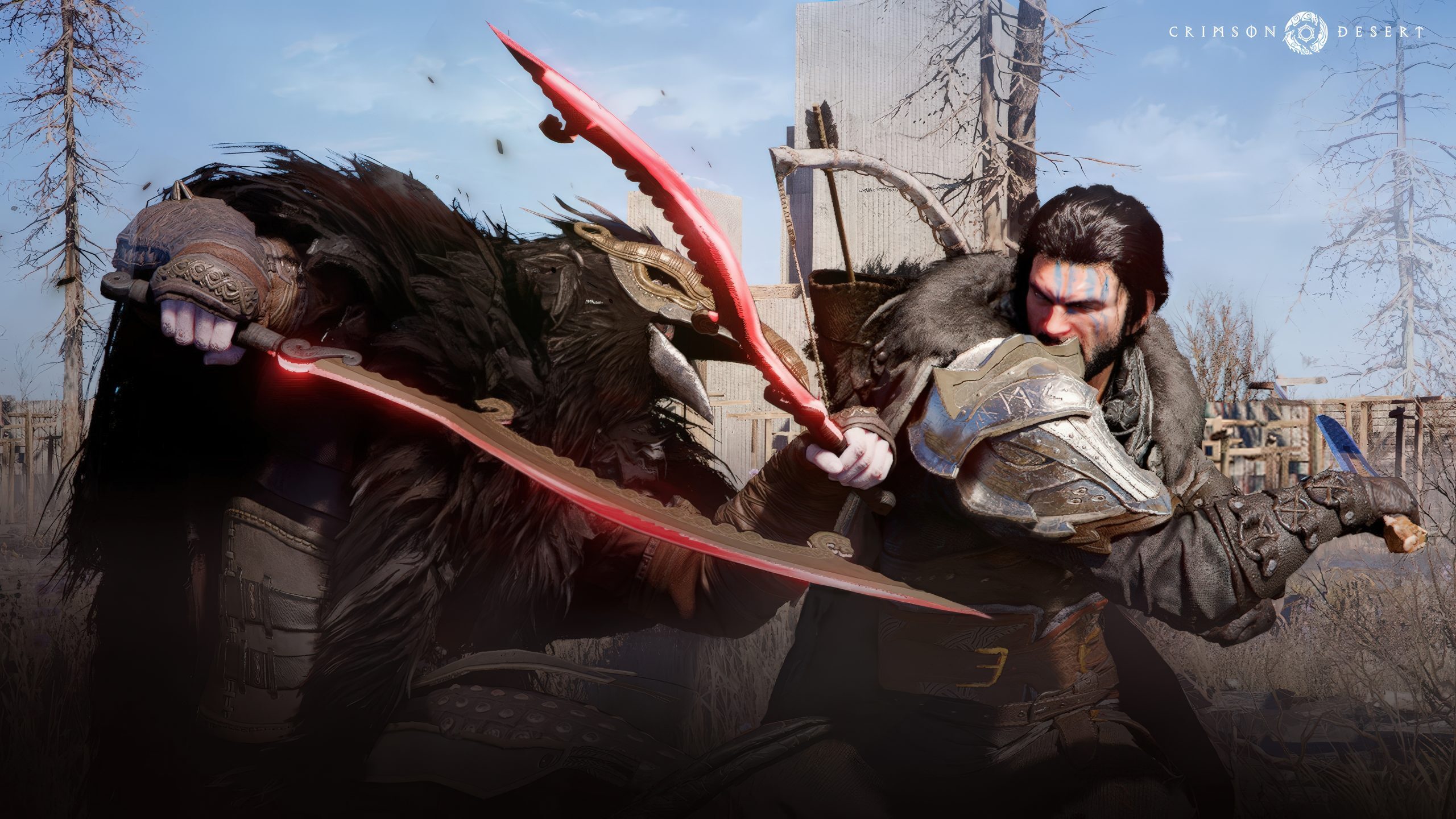
If there is one area where the game justifies its existence, it’s the Crimson Desert combat. Unlike the floaty, skill-bar-heavy combat often found in MMOs, this feels like a dedicated character action game. Kliff uses a mix of traditional sword-and-board tactics and brutal Taekwondo kicks. There is a palpable sense of physics; when you bash a shield into a knight’s face, the “hit-stop” effect makes you feel the impact.
However, my Crimson Desert combat first impression review wouldn’t be complete without mentioning the structural “sag” that occurs between these fights. The game often forces you into a loop of resource harvesting and crafting that feels directly inherited from Black Desert Online. While the Crimson Desert vs Black Desert gameplay feel is much more focused on single-player narrative, the “grind” is still very much in the DNA. Scouring a cliffside for iron ore while a world-ending threat looms in the Crimson Desert story creates a strange narrative dissonance. It’s a new action RPG that wants to be both a tight cinematic experience and a 100-hour life simulator, and it doesn’t always bridge that gap successfully.
Performance and the World of Pywel

When discussing what it’s like playing Crimson Desert on PC, the conversation inevitably turns to performance. Even on recommended specifications, the game is a beast. The Crimson Desert graphics and performance first look reveals a title that pushes the boundaries of global illumination and particle effects. Shadows are deep, and the draw distances are staggering.
The world itself, Pywel, is divided into distinct biomes—from the lush greenery of Hernand to the redwood forests that dwarf the player. Yet, for all its beauty, some players might find the world lacks “texture.” In my experience with Crimson Desert open world, I found myself missing the environmental storytelling of a Witcher or Elden Ring. The world is pretty, but it sometimes feels like a very expensive stage set for the combat encounters rather than a lived-in place. The addition of Denuvo DRM at launch is also a point of contention for the community, though early reports suggest the impact on frame rates varies depending on the rig.
Should You Play It? The Final Word

So, is Crimson Desert fun to play from a player perspective? The answer depends largely on what you value in a new action RPG. If you are looking for a technical showcase with some of the most satisfying, “crunchy” combat in years, then yes—the Crimson Desert story and characters will provide a solid enough framework to keep you engaged through the spectacle. The martial arts cinema vibes and the sheer madness of the mechanics (like launching off a horse into a bird transformation) offer moments of genuine joy.
However, if you are sensitive to repetitive quest design and the “checklist” style of open-world gaming, you may find the middle sections of the game a bit dry. It is a banquet where the main course—the combat—is delicious, but the side dishes can sometimes taste a bit like cardboard. Ultimately, this Crimson Desert first impression leaves me respecting the ambition of Pearl Abyss even if the final product feels a bit baggy in its execution.
Don’t ignore the camp management. A properly upgraded Greymane camp grants powerful buffs that greatly reduce difficulty in late-game boss encounters.
With the Crimson Desert first impression now settled, the gaming community is left to decide if they are ready for a 100-hour journey that asks for a lot of your time in exchange for some of the most beautiful sights in gaming. Whether it becomes a classic or remains a “maximalist fever dream” is yet to be seen, but it is certainly a journey worth taking for the combat alone.


