

When principal Aaron Sykes was stabbed at Keysborough Secondary College, most headlines focused on the lockdown—how quickly it activated, how well students responded, and how orderly the campus remained. And yes, those elements mattered. But as more details surfaced across 9News, The Age, and ABC, a bigger picture formed. This wasn’t a student threat or a random attack. It was a targeted confrontation between two adults who knew each other. That raises an uncomfortable question: should schools have stronger systems to identify adult conflict before it reaches the point of violence? As Victoria reflects on the incident, the answer seems increasingly clear (keysborough educator attack).
Keysborough educator attack : The Stabbing That Happened Without Warning—At Least Publicly
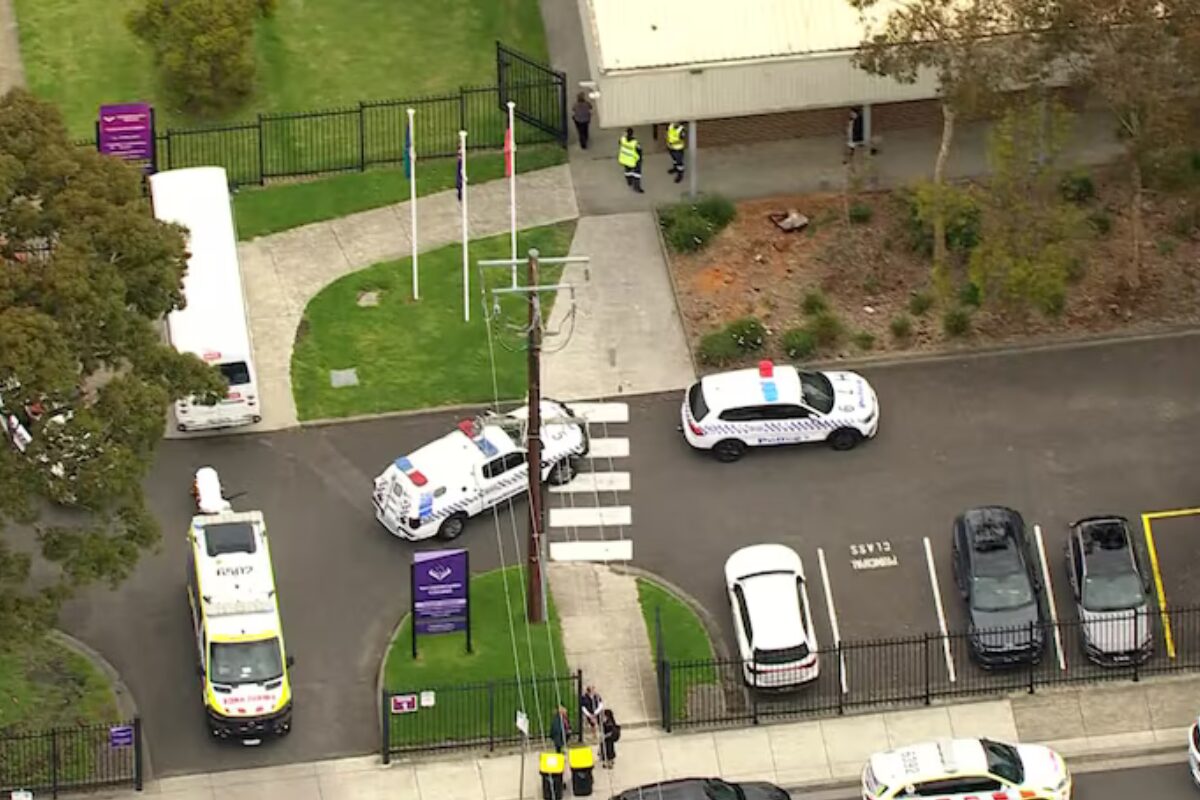
Police say the attack unfolded at around 3pm, and principal Sykes remained conscious as paramedics treated him. The man arrested at the scene was known to him. Investigators are now piecing together whether tensions had been building or whether the confrontation escalated unexpectedly. Regardless of the timeline, the fact that a dispute between adults reached a point of violence inside a school has fuelled calls for early-detection tools—something beyond sign-in books and polite reception counters.
Keysborough educator attack : Lockdown Protocols Worked, But They React—They Don’t Prevent
Keysborough’s Code Black activation was textbook perfect. Teachers reinforced rooms, students stayed low and silent, and communication flew out to parents with precision. The issue isn’t the lockdown; it’s what comes before. Schools spend enormous energy preparing for emergencies, yet very few have reliable systems for identifying potential risks involving adults—whether they’re parents, former students, contractors, or community members. This gap leaves staff exposed, especially principals who often mediate disputes behind closed doors.
Principals Carry More Frontline Risk Than Most People Realise –keysborough educator attack
Victorians often think of principals as high-level administrators, but their jobs involve meeting distressed parents, managing disciplinary conversations, and handling sensitive interpersonal disputes. Many principals say these conversations can become tense, unpredictable, and emotionally charged. The stabbing of Sykes underscores that risk. It suggests that occupational health and safety for educators needs a serious rethink, especially in high-pressure school communities.
Communication After the Attack Showed the Power of Transparency

One thing Keysborough did exceptionally well was communication. Within minutes, families received confirmation that students were safe. Later in the evening, the school released reassuring updates about Sykes’ condition and clarified that the alleged attacker “will not be allowed on school grounds again.” That messaging prevented panic, calmed rumours, and helped the community regain a sense of stability. It proved that transparency isn’t just a courtesy—it’s a critical safety tool.
Police Investigators Are Looking for Signs That Could Have Helped
Detectives are exploring the relationship between Sykes and the alleged attacker, looking for previous interactions or patterns that might indicate earlier conflict. If red flags existed, they may offer clues for future prevention strategies. If no warnings surfaced at all, the incident shows the limits of existing systems. Either way, Victoria will likely use the findings to build new guidelines aimed at recognising and diffusing adult tensions before violence erupts.
The Keysborough educator attack has reinforced the value of lockdown training, but it has also exposed the next frontier in school safety: the ability to detect danger long before alarms sound. Principals and teachers face risks that go unseen by the wider public, and this incident may finally push Victoria to introduce more proactive safety frameworks. As principal Sykes recovers and the investigation continues, the conversation is shifting from emergency reaction to early prevention—and that shift may define the future of school safety.


