It lasted only a matter of hours for Cloudflare Outage Perth.
A configuration file grew too large, a Cloudflare system broke, and websites across the world — including those relied on by Perth travellers, Australian small businesses, emergency services and journalists — stopped responding.
It wasn’t a cyberattack, a hostile nation-state, It wasn’t Russia, China, North Korea or an AI superworm.
It was a typo. An oversized file. A small oversight with global consequences.
And if that fragile truth doesn’t scare Australia’s policymakers, it should.
Because the real problem isn’t Cloudflare.
It’s the fact that one company in San Francisco can flicker… and half of Australia goes with it.
The outage was global — Cloudflare Outage Perth
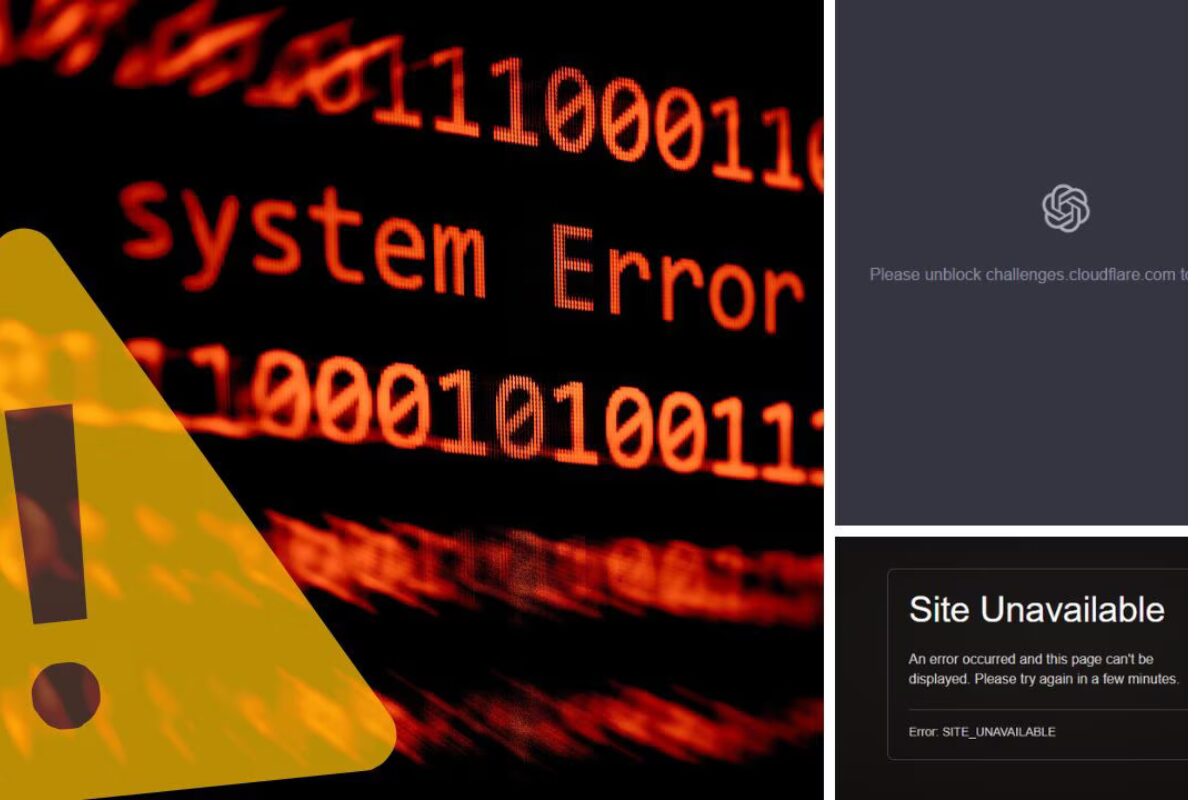
Perth sits digitally isolated from the eastern states, with most routing still dependent on international pathways. When Cloudflare collapsed:
- Perth Airport’s public information systems broke
- Australian users couldn’t access ChatGPT, Spotify, Amazon or X
- Businesses using Cloudflare-protected payment and booking portals went offline
- Remote workers lost access to cloud platforms
- Government and research platforms became unreachable
In normal times, Perth is far away.
But during an outage?
It’s cut off.
A cybersecurity consultant working in WA said:
“We’ve built the entire state on cloud infrastructure — and most of it only works if the U.S. works. That should terrify everyone from CIOs to Cabinet.”
The illusion of choice: why Australia’s internet is not actually decentralised (Cloudflare Outage Perth)
Australia’s digital ecosystem looks big, but underneath it runs through very few
When one fails, the rest strain, when two fail, the country stalls.
When three fail — we’re in an actual emergency.
Perth and WA: the canary in the coal mine – Cloudflare Outage Perth
WA has the fewest data centres.
The longest routes to backbone infrastructure.
And the greatest distance between redundant systems.
When systems fail, Sydney and Melbourne degrade.
Perth disconnects.
This is why outages like Cloudflare always feel deeper in the west.
There is no fallback. No national independent alternative.
A former Telstra networks engineer described it this way:
“WA is running on trust — trust that global infrastructure won’t break. So far that’s worked… until it doesn’t.”
The national security angle no one wants to talk about (Cloudflare Outage Perth)

If a single configuration error can trigger this, think about what a targeted exploit could do.
The Cloudflare outage was:
- Not malicious
- Not targeted
- Not political
- Not persistent
And still it brought critical systems down.
What happens when an attack is malicious?
What happens if the outage is designed to stay down?
The truth:
Australia has no sovereign alternative to Cloudflare-scale routing.
And the government has no strategic communications fallback designed for civilians during failures like this.
Meanwhile, the government stayed silent — again

After the Optus outage, Australians were promised improvement.
After the CrowdStrike meltdown, we were told lessons were learned.
But after Cloudflare?
No official statement, no briefing, no infrastructure assurance.
No national contingency explanation.
Cybersecurity researchers say the silence speaks louder than a press conference ever could.
This is not the first warning
Every time, the pattern repeats:
- Outage occurs
- Government issues vague statement
- Company apologises
- Public moves on
- No reform happens
Next time, it may not be fixable in three hours.
A digital economy built on borrowed infrastructure
Cloudflare is not evil, not incompetent. Cloudflare is simply not designed to be the foundation of an entire nation’s digital continuity.
But that is what Australia has allowed it to become. Our economy, banking, transport, airport systems, media, APIs — all flow through foreign infrastructure stacks owned by private corporations that we cannot regulate or intervene in when things go wrong. That is not resilience, is dependence.
Perth was lucky. The outage ended quickly. Flights kept running. Most people just rebooted their tabs and moved on.
But the event exposed a truth Australia keeps avoiding:
We are not ready for a large-scale internet failure — and we are not in control of the infrastructure we rely on.
The next outage could last longer.
The next failure could be targeted.
And the next emergency may not be so forgiving.
This wasn’t a crisis.
It was a warning.
Australia would be wise to treat it like one.