

The digital air is thick with tension following Nvidia’s recent showcase of its latest technological leap. While the promise of “AI-powered breakthroughs” usually excites the tech-savvy, the community reaction to the Resident Evil Requiem graphics under the new DLSS 5 filter has been anything but celebratory. For a series built on the atmospheric dread of survival horror, the introduction of an AI upscaled graphics filter that appears to “beautify” or “yassify” characters has left many wondering if the soul of the game is being polished away.
The First 30 Minutes: A Surreal Visual Shift
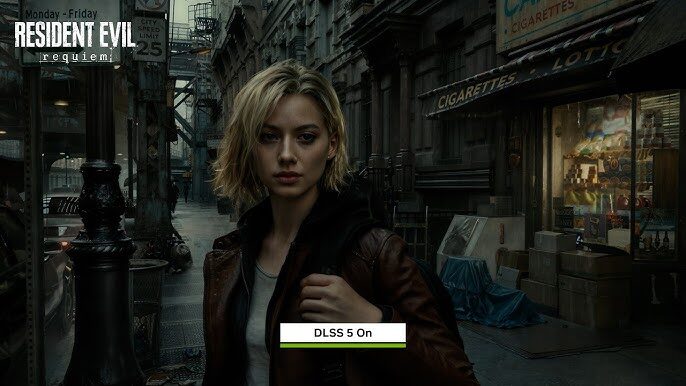
Stepping into the world of Resident Evil Requiem with DLSS 5 enabled provides an immediate, almost jarring “first contact.” Within the first half-hour, the atmospheric grime and sweat-beaded tension we expect from Capcom’s RE Engine feel… different. The first impression of Resident Evil Requiem graphics with the filter active is one of hyper-cleanliness that feels at odds with the survival horror genre.
Grace Ashcroft, the game’s co-lead, is perhaps the most notable victim of this “enhancement.” In the original developer vision, she is a character worn by the weight of her environment. With the filter on, her features are airbrushed, her lips appear unnaturally enlarged, and the skin texture looks more like a high-fashion editorial than a woman fighting for her life. Even the legendary Leon S. Kennedy isn’t safe; the AI seems to struggle with his iconic features, leading to a Resident Evil Requiem character model change that feels less like an upgrade and more like a strange, digital mask.
Pros/Cons Checklist: The DLSS 5 Impact
Player Reactions and the “Art Direction” Debate
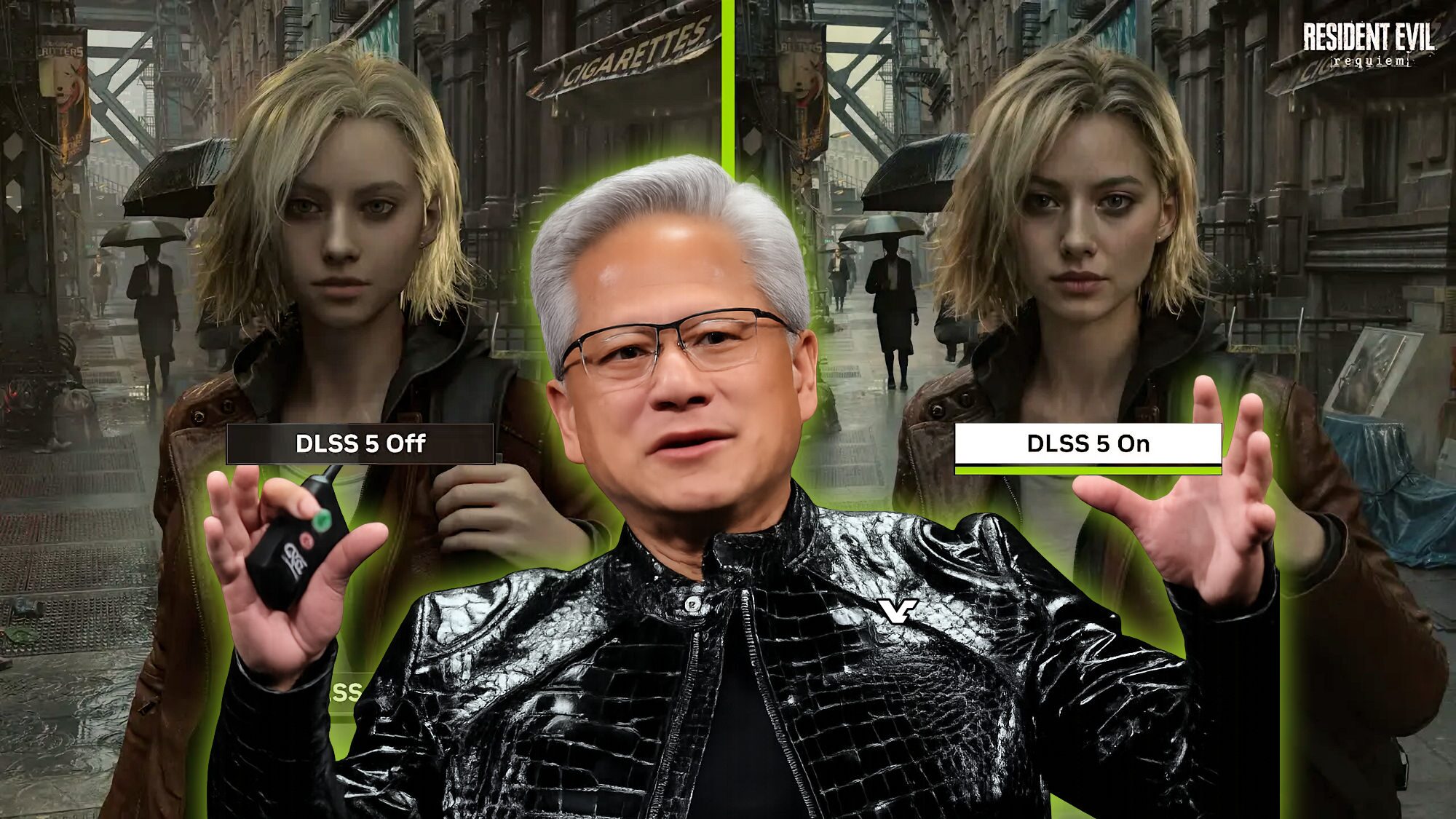
The Resident Evil Requiem DLSS 5 player reaction has been swift and largely mocking. Social media has been flooded with “DLSS On vs. Off” memes, with many comparing the AI’s work to amateur “beauty mods” found on sites like Nexus Mods. The primary concern isn’t just the look, but the principle: does DLSS 5 ruin game art style? When Nvidia’s Jensen Huang claimed they were “reinventing computer graphics,” he likely didn’t expect the backlash from purists who value the developer’s original intent. High-profile figures like Bethesda’s Todd Howard and Capcom’s Jun Takeuchi have offered corporate endorsements, but the gaming community mocks new AI upscaling for its perceived lack of soul. Veteran critics have pointed out that while the tech is impressive from a purely mathematical standpoint, it fails the “vibe check” required for immersive storytelling.
The Performance Verdict: Power vs. Personality
When we look at the raw numbers, the tech is undeniably powerful. Nvidia AI has always been about doing more with less, and DLSS 5 continues that by allowing the Nintendo Switch 2 to run a game as heavy as Requiem. However, the gaming experience is about more than just frames per second.
In our hands on with Nvidia DLSS 5 in games, we noticed that the Resident Evil Requiem immersive experience ruined by the filter wasn’t due to a lack of pixels, but a lack of atmosphere. In a horror game, shadows are a character. When the AI decides that “more light” or “smoother skin” is better, it ignores the creative choices made by the lighting artists at Capcom.
- FPS Stability: 9/10 (Smooth as silk)
- Visual Fidelity: 4/10 (Too “uncanny valley”)
- Artistic Integrity: 2/10 (Overwrites developer intent)
The “Should You Play With It?” Sidebar – Resident Evil Requiem graphics
For the Casual Gamer:

If you are playing on older hardware or the Switch 2 and need every frame you can get to make the game playable, DLSS 5 is a godsend. You might have to ignore Leon’s weirdly smooth forehead, but the trade-off in fluid gameplay is likely worth it.
For the Hardcore Purist:
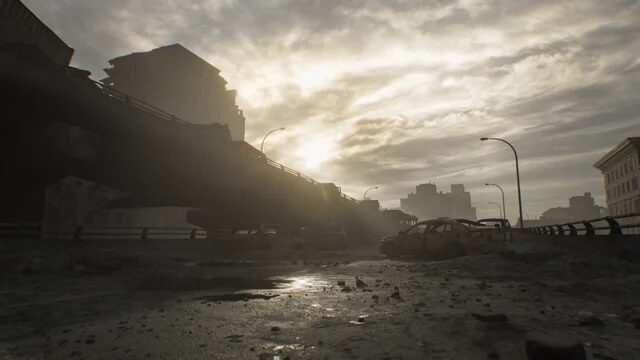
Avoid the “AI Filter” setting at all costs. To see the Resident Evil Requiem graphics as they were meant to be seen—gritty, dark, and terrifying—stick to standard DLSS upscaling or native resolution. The first look at AI generated game visuals suggests we aren’t quite ready for a world where an algorithm decides how a hero should look.
Conclusion: A Future Filtered by AI – Resident Evil Requiem graphics
As we look at the landscape of 2026, it’s clear that the line between human creativity and machine “optimization” is blurring. While the Resident Evil Requiem graphics remain a benchmark for the industry, the controversy surrounding DLSS 5 serves as a cautionary tale. Technology should be a tool that empowers artists, not a filter that paints over their work. Whether Nvidia can fine-tune this “breakthrough” to respect art direction remains to be seen, but for now, the fans have spoken: they prefer their heroes with a little more grit and a little less “yassification.”


